Some days the screen steals the weather. Light falls outside but we glow blue. Notifications crowd the ribs. Thoughts grow tight. Then a blackbird cuts a line through the afternoon and the body remembers something the mind forgot: there is more. There is wind. There is breath. There is ground that will take your weight and give you some back.
When I say “nature as co-coach,” I don’t mean a gimmick. I mean company—leaf, sky, water, stone—working alongside us. A way of paying attention that widens the frame until your life reappears in it. Coaching, here, is not an escape from the world but a return to it.
Why step outside at all?
Because minds tire. Not from effort alone, but from the kind of effort. Directed attention—the narrow beam we use to read, plan, scroll—fatigues. Natural settings ask less of that beam and more of our softer, effortless attention. The result can be a clearer head, better mood, and steadier decisions. That’s not just poetry; it’s well evidenced in the literature on Attention Restoration Theory and related research.
Because bodies tell the truth before language does. Walk five minutes beneath trees and notice what shifts. Heart rate, breath depth, shoulder height. Studies on green exercise and forest environments repeatedly point to reduced stress markers, lower blood pressure, and improved affect—even with brief exposure.
Because place participates. A view through a window changed surgical outcomes in a classic study; the world beyond the glass mattered. Stepping into that world widens what’s possible in a conversation about your life.
And because walking itself helps ideas move. The Stanford work is simple and generous: walking boosts creative thinking during and shortly after. We don’t have to force solutions; we can walk into them.
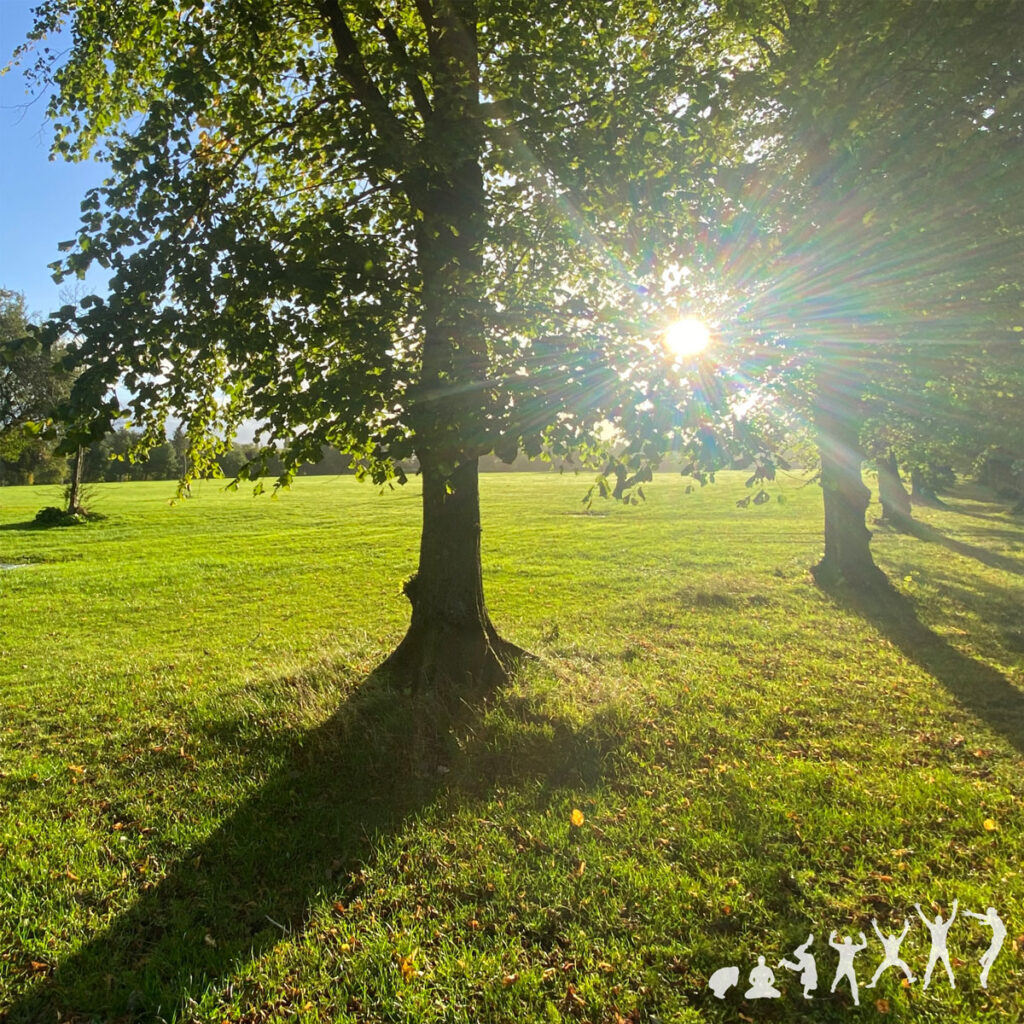
Nature-as-co-coach – Gavin-Birchall
What “co-coach” means (and doesn’t).
Nature is not a tool we use up. It’s company we keep. Sometimes a teacher, sometimes a mirror, sometimes just a wider room to breathe in. The agenda is human, but the field is shared. We don’t extract inspiration; we enter a conversation already happening.
“Integral” here means nothing essential left out—body, mind, emotions, relationships, and the systems we move within. When we step outside, each dimension becomes easier to include. The wind interrupts the monologue in your head. A hill reminds you of legs. The non-negotiable rhythm of weather says: pace yourself.
This is not about heroics. No wild swims at dawn unless you want to. No forced peak experiences. Just a returning to what’s ordinary and close, which is often enough.
Designing reflective rituals beyond the screen.
Rituals are simply repeatable ways of paying attention. They don’t need incense or perfection. They need a beginning, a middle, an end—and a reason that makes sense to your life.
Below are designs I use with clients (and myself). Adapt as needed. Small is good. Frequent is better than grand.
1) The Threshold Walk (10–20 minutes)
Why: Reset attention and mood before a decision or meeting.
How: Leave the building. Phone on airplane mode. Walk a familiar loop—out the door, left at the corner, round the block, back again. Match your breath to your steps for the first minute. Then widen your gaze to take in the whole field. Ask one question only: What value of mine wants a say in what comes next? Return. Act from that value, not from hurry.
Note: If mobility is limited, a threshold sit by an open window works: feel air, look far, soften jaw; three minutes helps. Evidence suggests even viewing nature can aid restoration.
2) The River Practice (20–40 minutes, weekly)
Why: Let the nervous system settle; let rumination run downstream.
How: Go to moving water—a canal will do. Sit or stroll at an unremarkable pace. When a worry loops, place it on the water with your eyes and follow it for three breaths. Let the current do the rest. Close with one sentence in a small notebook: “Today I am willing to carry X, and I’m putting Y down.”
Research nudge: Exposure to green/blue space is associated with lower stress and better affect; small, repeated doses count.
3) The Tree Check-In (under 5 minutes)
Why: Micro-ritual for busy days.
How: Find a tree on your route (a city plane tree is perfect). Pause. Feel feet. One hand on the back of your neck, one on your sternum. Three slow exhales. Ask, “What am I leaning on right now?” Leave one unhelpful thing with the bark. Continue.
Why it works: Brief regulation and orientation; repeated contact increases nature connectedness, which correlates with wellbeing and pro-nature behaviours.
4) The Weather Report (5–15 minutes, end of day)
Why: Integrate emotion without over-thinking it.
How: Step outside. Name the sky out loud as if it were your inner weather: “Low clouds, bright edge, wind from the west.” Then name the smallest true thing about your day. Close with thanks to anything that helped (a person, a kettle, the bus driver). Go back in different.
5) The Listening Path (30–60 minutes, fortnightly or monthly)
Why: Deepen relationships and psychological safety at work or home.
How: Invite a colleague or loved one for a silent walk: ten minutes without talking, then fifteen where each person speaks for five minutes while the other only reflects back key words. Swap. End with one concrete action each. The terrain will do half the work; you just keep pace.
How outdoor sessions work.
Sometimes we coach on a bench by the river; sometimes we wander a park; sometimes we stay on quiet streets. The topic you bring sets our direction, the landscape sets our tempo. We’ll decide together how far and how fast; accessibility and safety come first. If the weather is wild, we can meet indoors or online—and still bring the outside in (a plant on the table, a window, a stone in the hand).
A typical arc: arrive (with what’s present), attune (breath, feet, field of view), explore (walk/talk, pause, note), experiment (one tiny practice to test this week), close (name what’s shifted, what you’ll try, how you’ll remember).
No performance. No step counts. Just a conversation large enough for your life.
Brief vignettes.
The founder who couldn’t think straight.
Three screens, thirteen tabs, a decision overdue. We met beside a canal for forty minutes. She named three values out loud on the return leg. In the room that followed, she cut one project cleanly, kept one, paused one. “I can hear myself again,” she said. (ART would predict this: restored attention; better executive function.)
The clinician who carried everyone.
His shoulders told the story. We used The Tree Check-In outside the hospital entrance twice a day for a week. The ritual took 90 seconds. He reported less end-of-shift anger and one better conversation with a patient’s family. Small practice, outsized return—consistent with evidence on brief green micro-breaks.
The team stuck in polite silence.
We ran a Listening Path in a city park. Ten people, pairs changing each loop. Sun through plane trees. By the second round, truth arrived without drama. A modest but real shift in the “space between,” which is where most work actually gets done.
Designing your own rituals (a simple template).
Name the why. Calm? Clarity? Contact? Creativity?
Choose a scale. 90 seconds, 10 minutes, 40 minutes.
Pick a place you’ll actually use. A doorstep counts.
Add one sensory anchor. Breath, feet, far-gaze, birdsong.
Add one question. Keep it kind. “What wants attention?”
Add one closure. A sentence, a bow, a note, a glass of water.
Repeat on purpose. Rituals are rituals because they recur.
If you like structure, tie the ritual to a cue you already meet: the first kettle of the day; the walk from train to office; the moment you park the car.
Notes for UK weather (and reality).
Rain is not a moral failing. Coat, hat, done. A two-minute doorway ritual beats no ritual.
Short winter days: borrow the edge-light—dawn or dusk—for five minutes; it does something kind to the nervous system.
Access matters: if you can’t get to green space, use sky, houseplants, a window view, or a pocket stone. Many benefits arrive with “nearby nature” and even images.
Safety first: choose well-lit, familiar routes; tell someone your plan; headphones off if you’re near roads.
What the research keeps saying (and why I still trust experience more).
Across decades, the pattern holds: time with nature—looking at it, walking in it, tending it—helps minds recover, improves mood, lowers stress, and often unlocks better thinking. (Kaplan’s attention restoration; Ulrich’s stress recovery studies; meta-analyses on green exercise; forest-bathing reviews.) None of this requires heroics or wilderness; small, repeated contact works. And in the UK context, rebuilding nature connectedness looks to be a public good as well as a personal one. Natural England+7ScienceDirect+7ScienceDirect+7
Still: trust your body first. If a ritual feels like punishment, it isn’t a ritual; it’s another screen-shaped demand. Adjust until it’s kind.
How to begin.
You don’t need to prepare a grand plan. Bring your real day and a pair of shoes. We can meet online and design a ritual that fits your life (and local weather), or we can step outside together—Lancashire, or by arrangement. Ten minutes can be enough. So can a single tree.
If you’re curious, book a short, no-obligation intro conversation. We’ll listen for what nature already knows about the question you’re carrying, and we’ll craft a small, human ritual you can repeat.
Closing.
Screens are good servants and poor habitats. Nature is not a backdrop but a fellow traveller. When we let it co-coach—one breath of wind, one lap of water, one bench in winter light—our lives come back into view. Then decisions get simpler. Not easier, always. Simpler. You step, and the ground steps with you.